
Diagnose the site
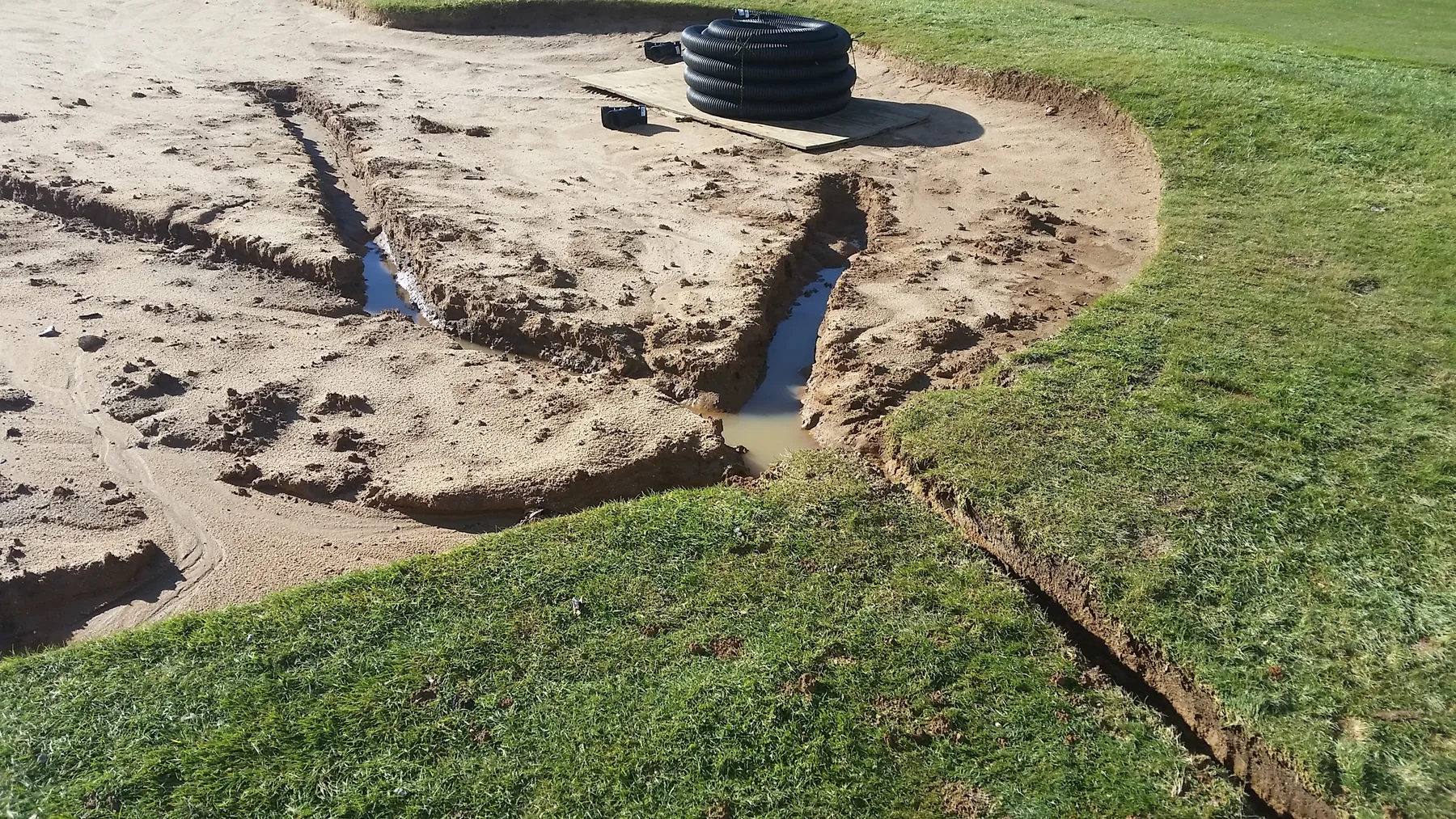
Identify wet areas, traffic patterns, low points, existing features, and the turf condition around them.
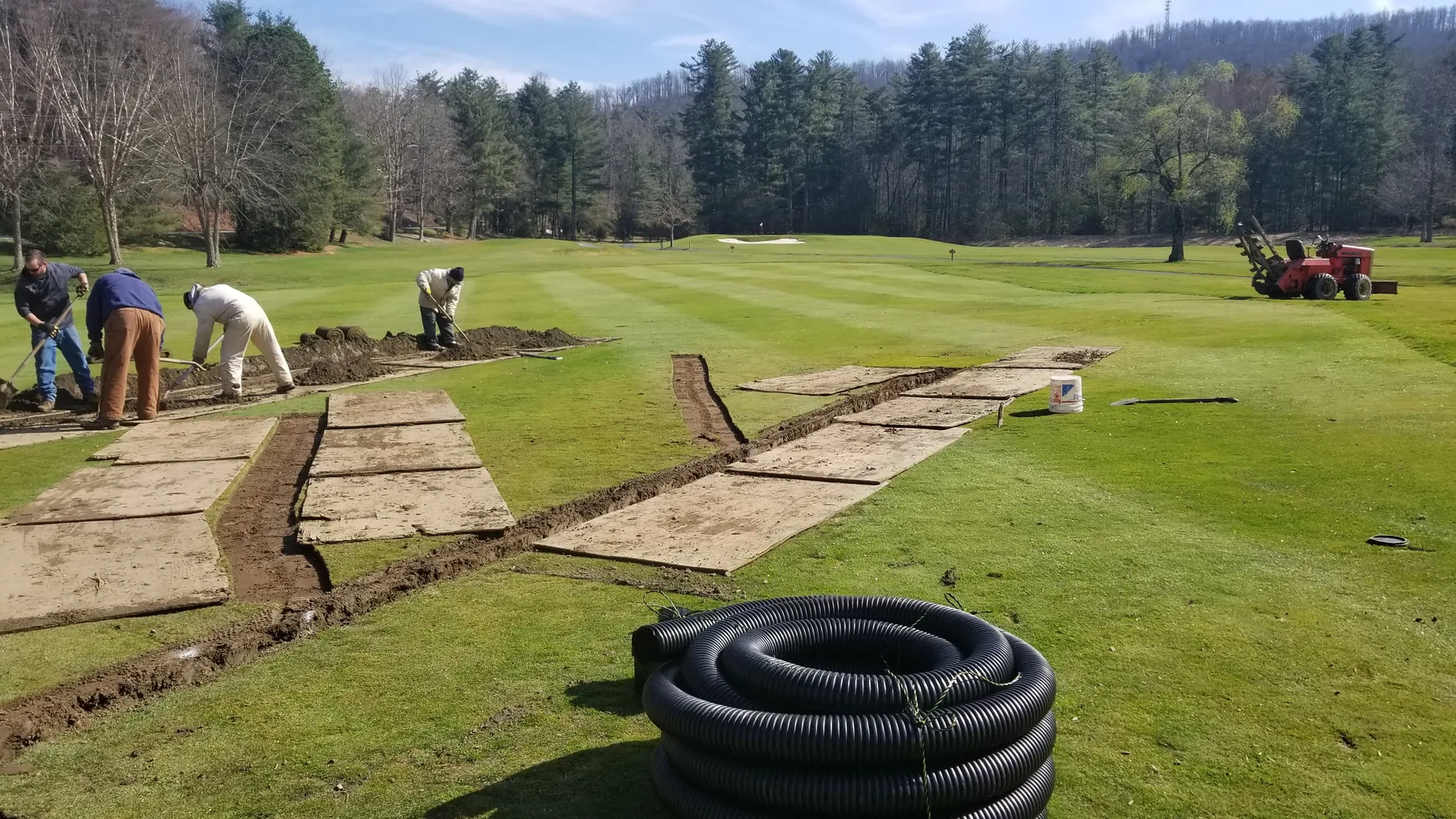
When water cannot move through a surface correctly, turf can stay soft, thin, stressed, and slow to recover. The visible symptom may be a wet spot, an unstable bunker edge, a worn approach, or repeated turf decline—but the cause is often grade, soil, traffic, and drainage working against one another.
We look at the whole site before recommending a fix. That gives the work a proper outlet, a practical route, and a finish that respects how the turf needs to perform afterward.
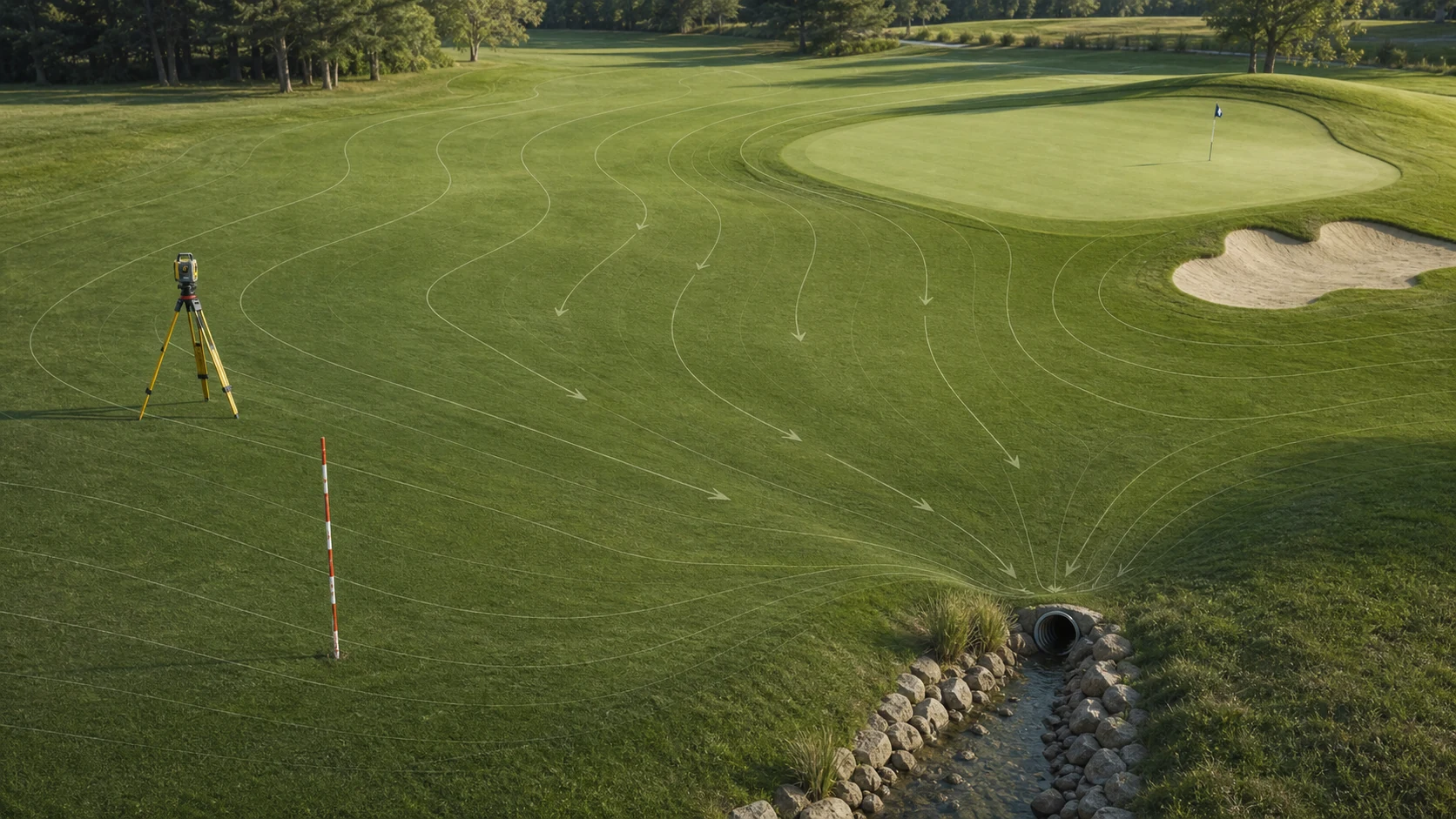
Drainage is a sequence of careful decisions, not just a trench and pipe.
Identify wet areas, traffic patterns, low points, existing features, and the turf condition around them.
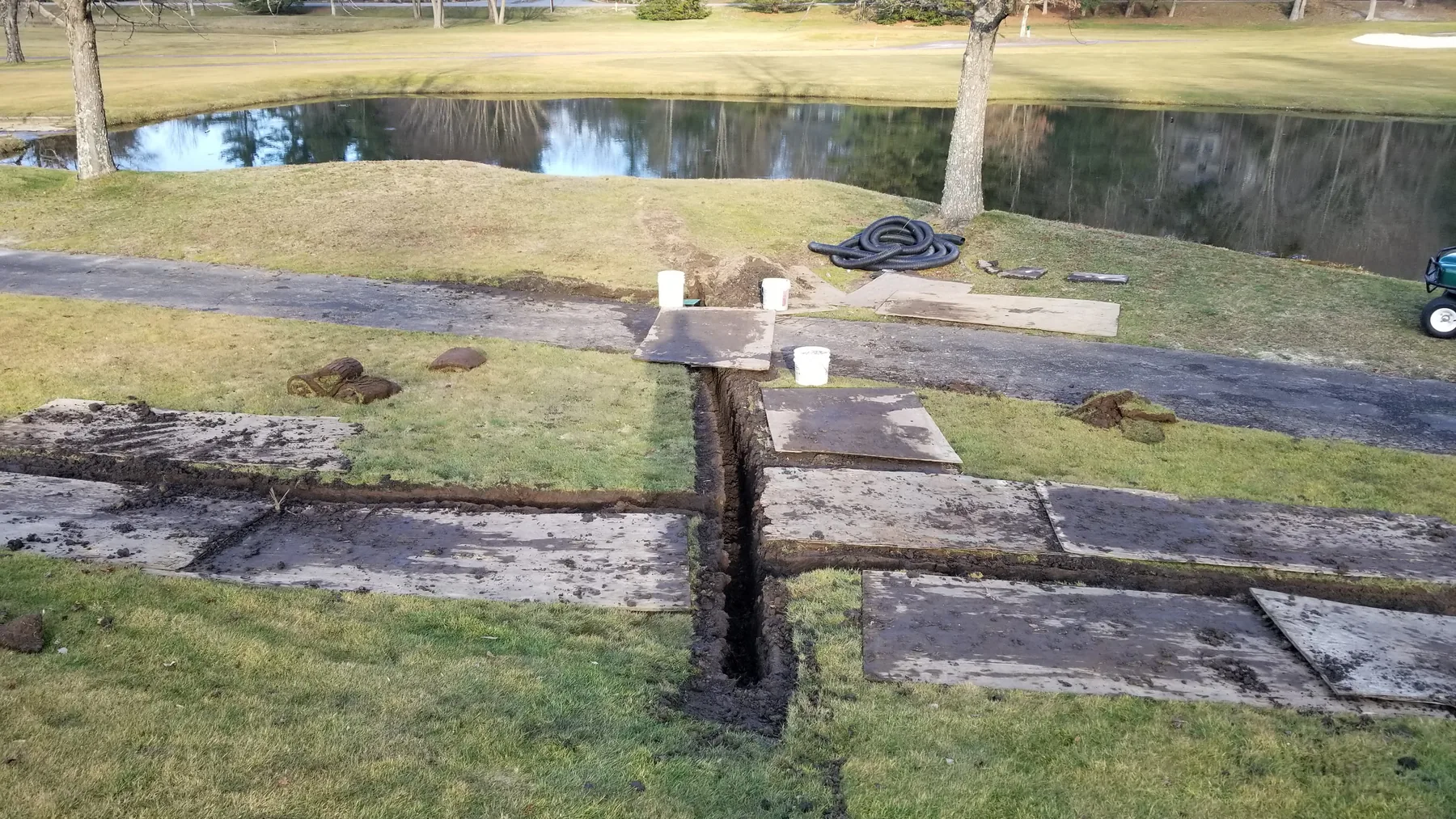
Verify grade and determine where water can move safely and effectively.
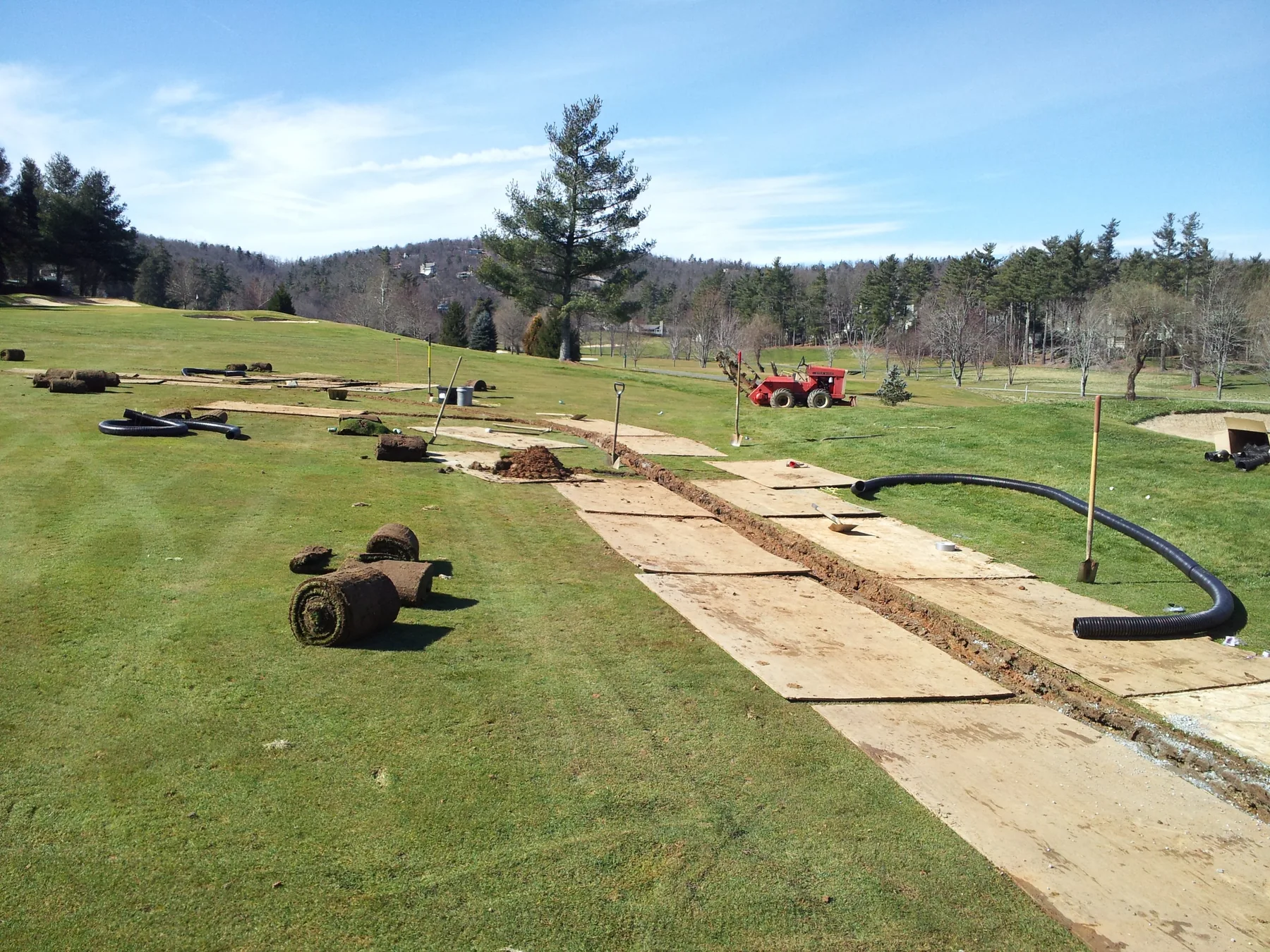
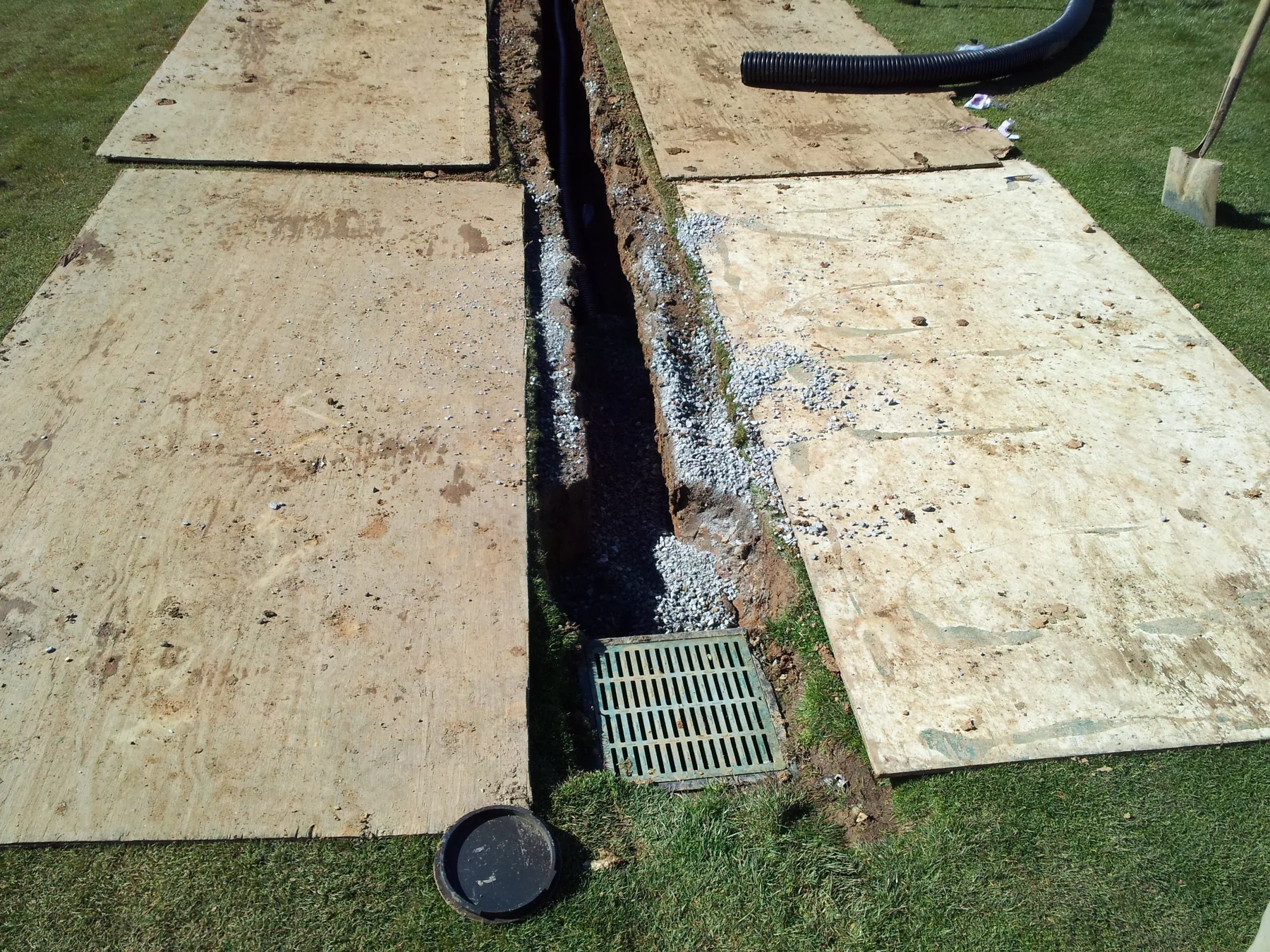
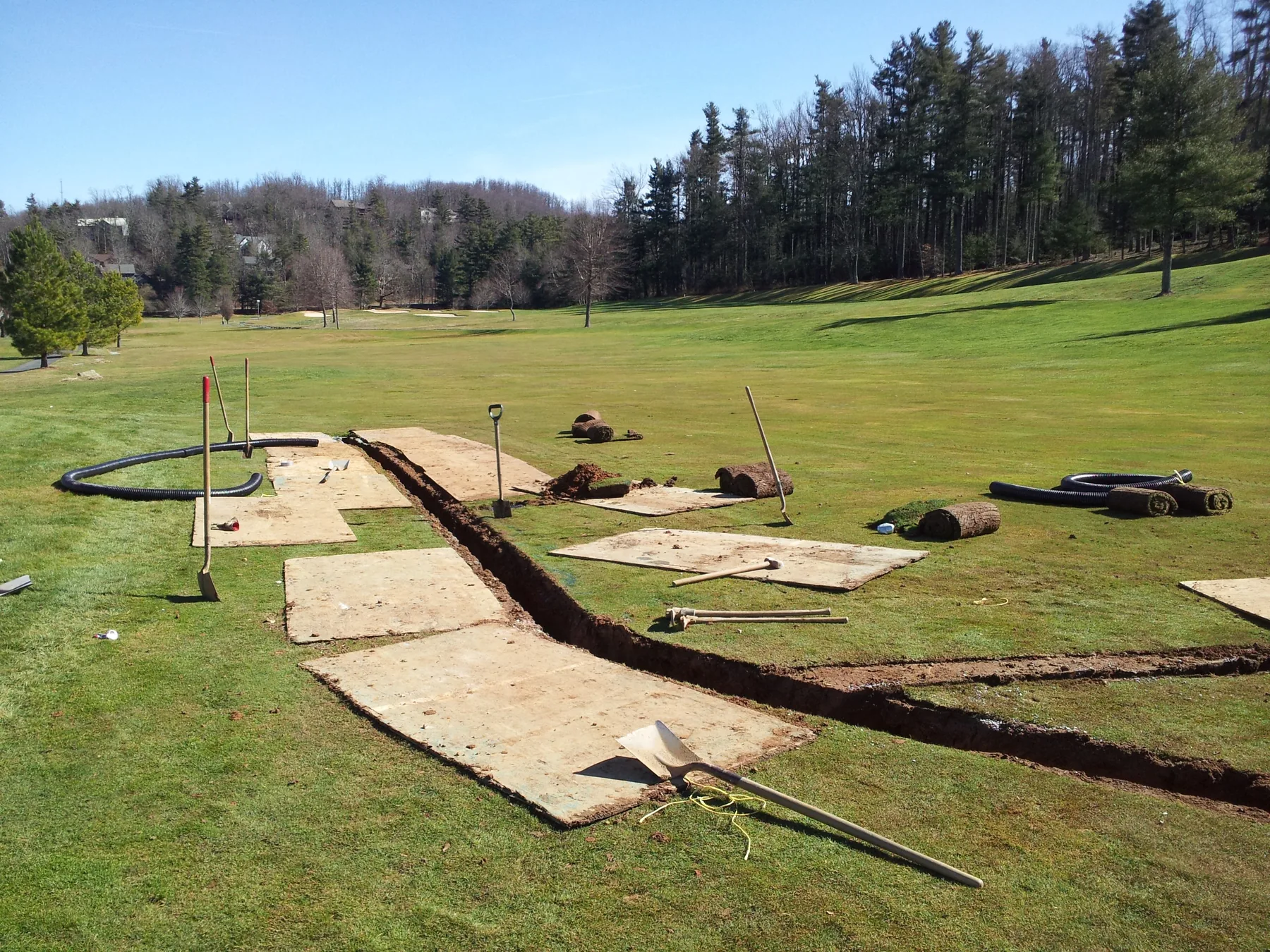
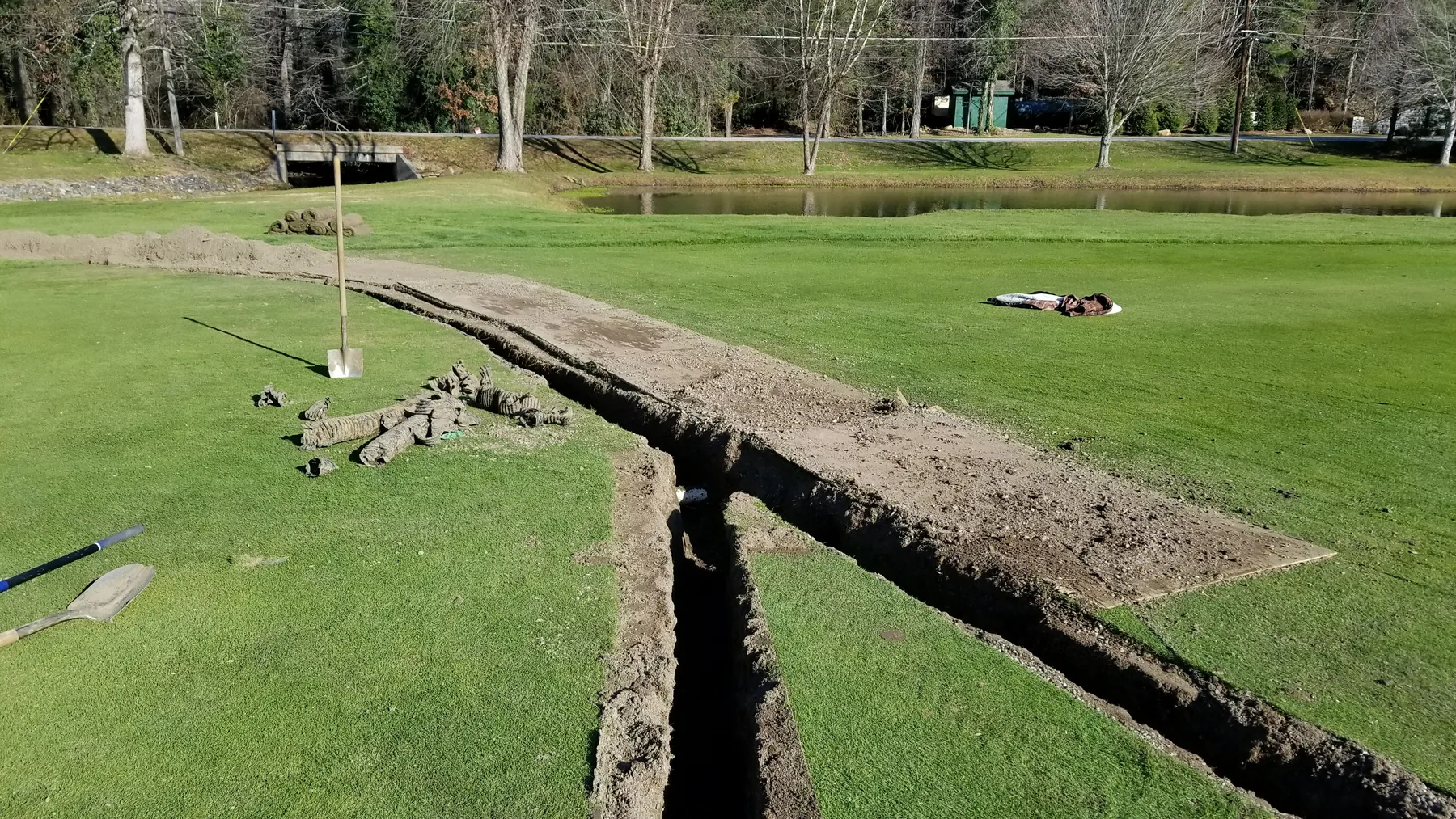
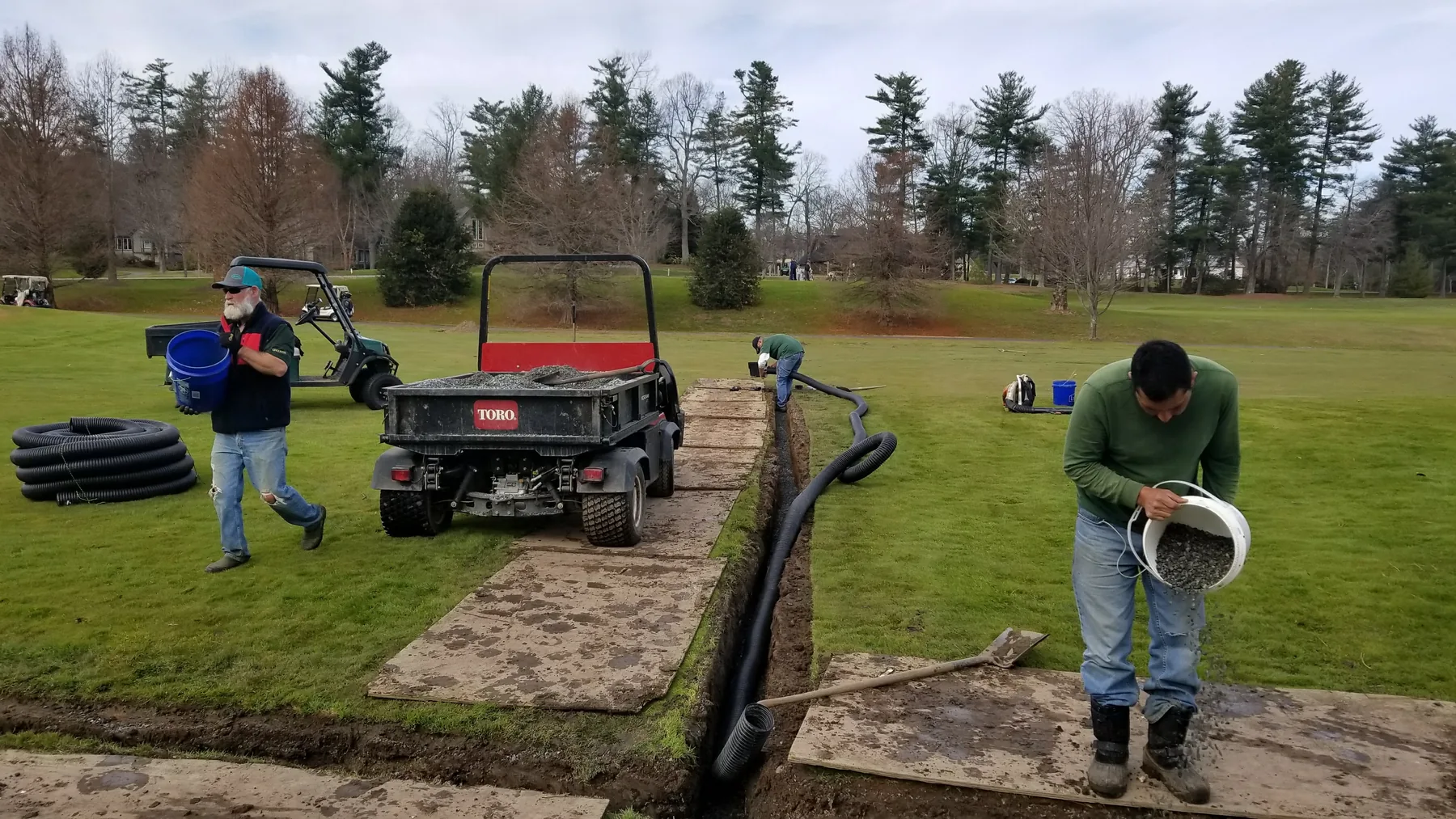
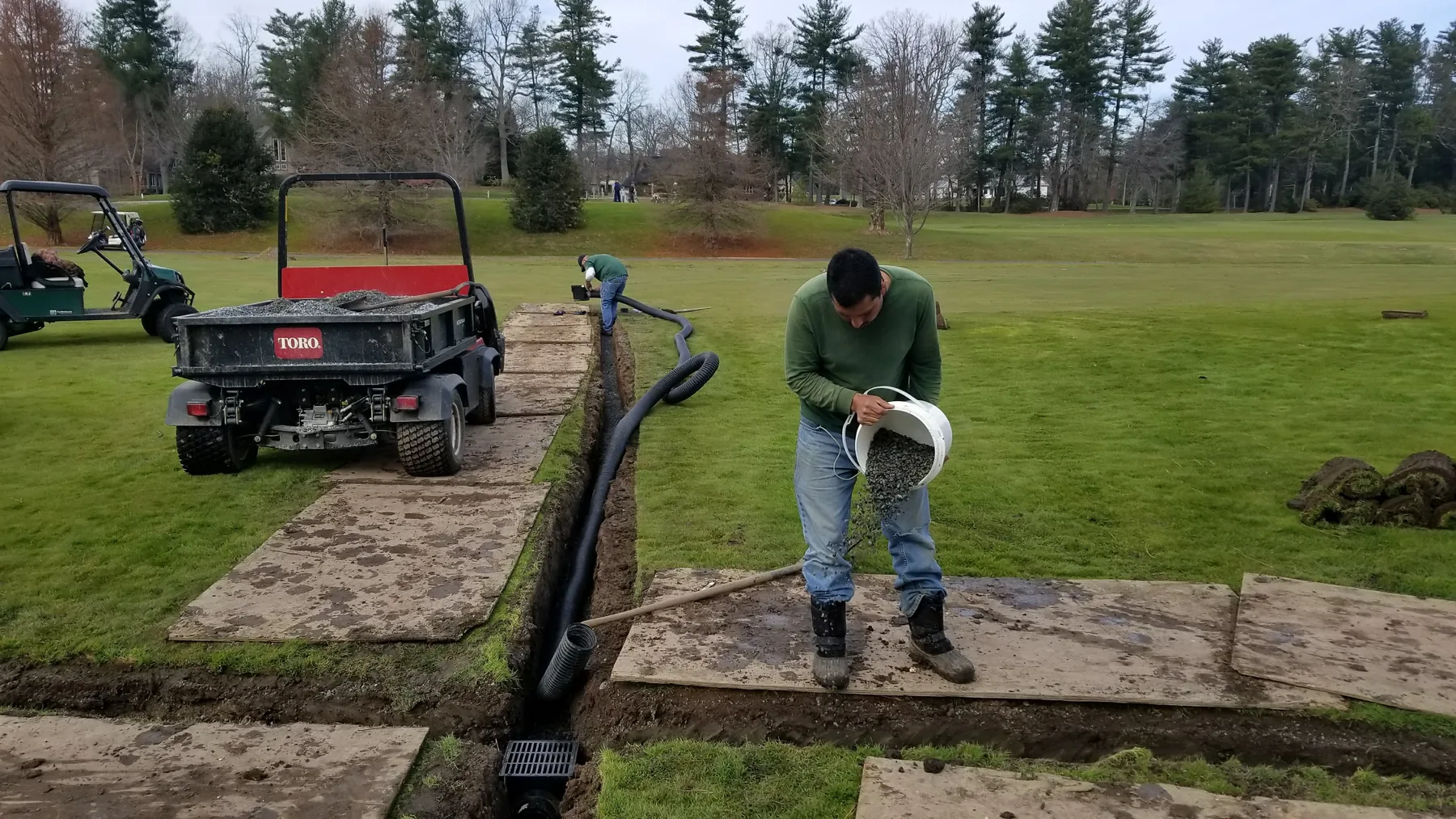
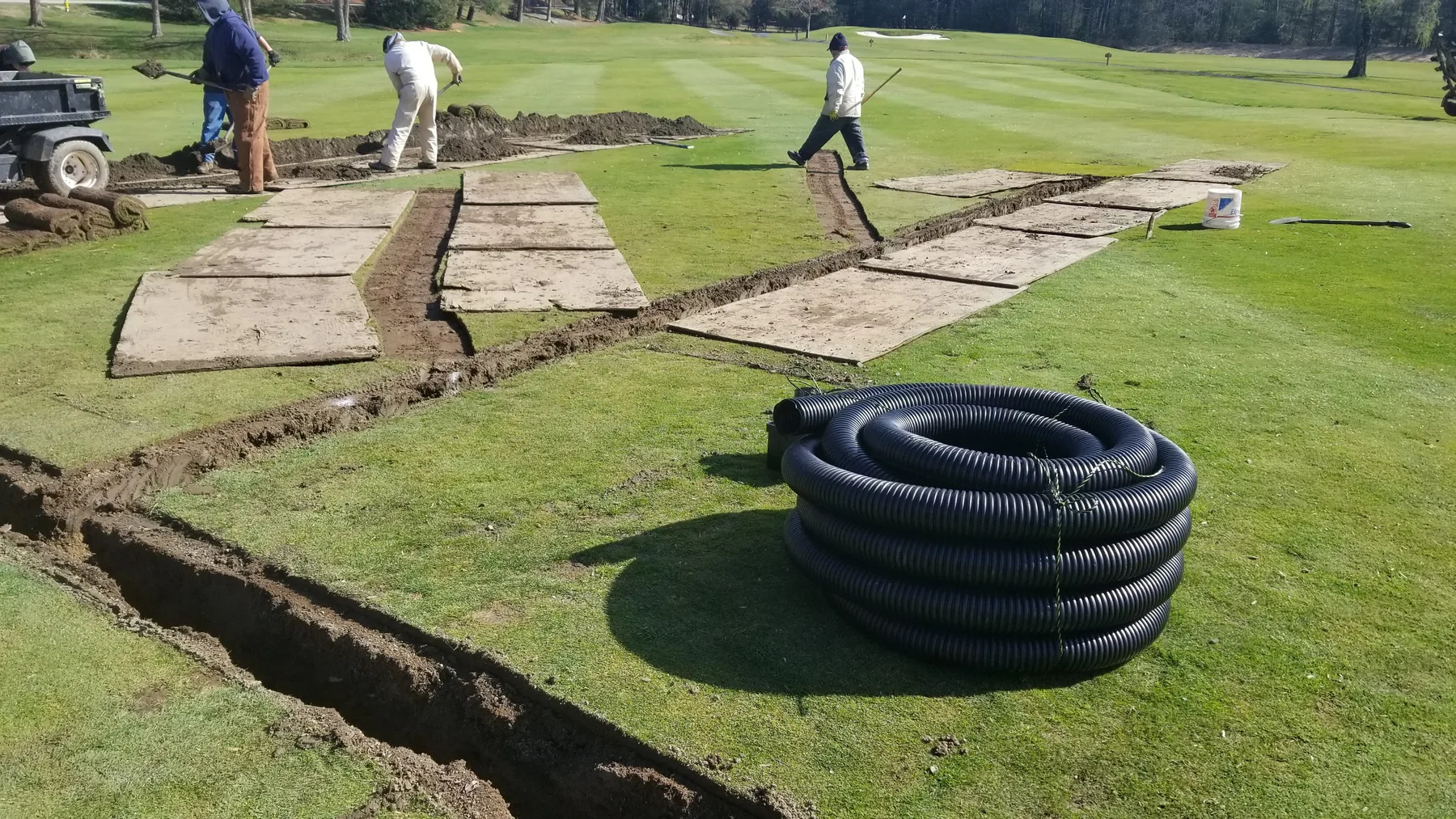
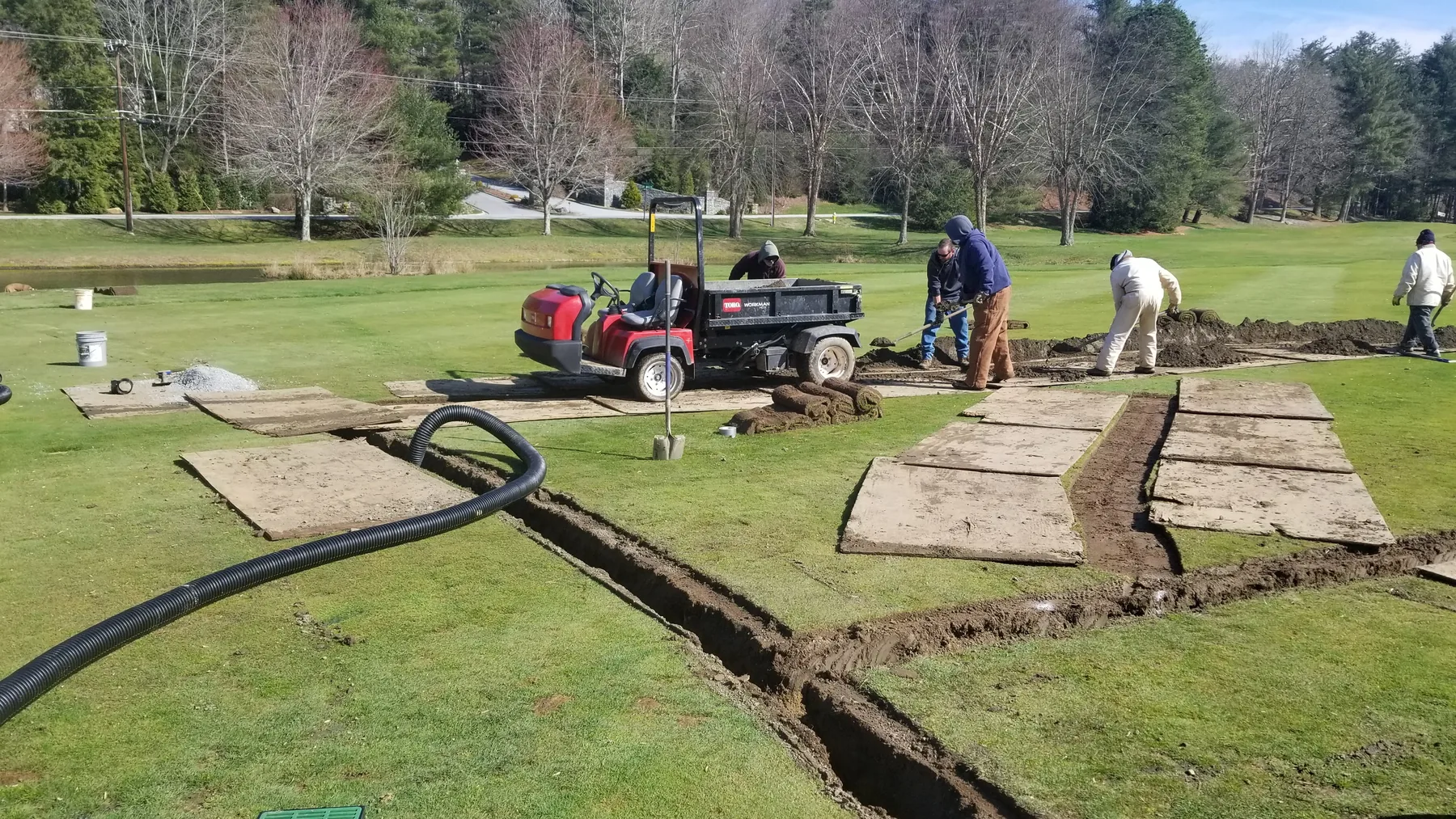
Use plywood travel routes and an organized work zone to limit avoidable turf damage.
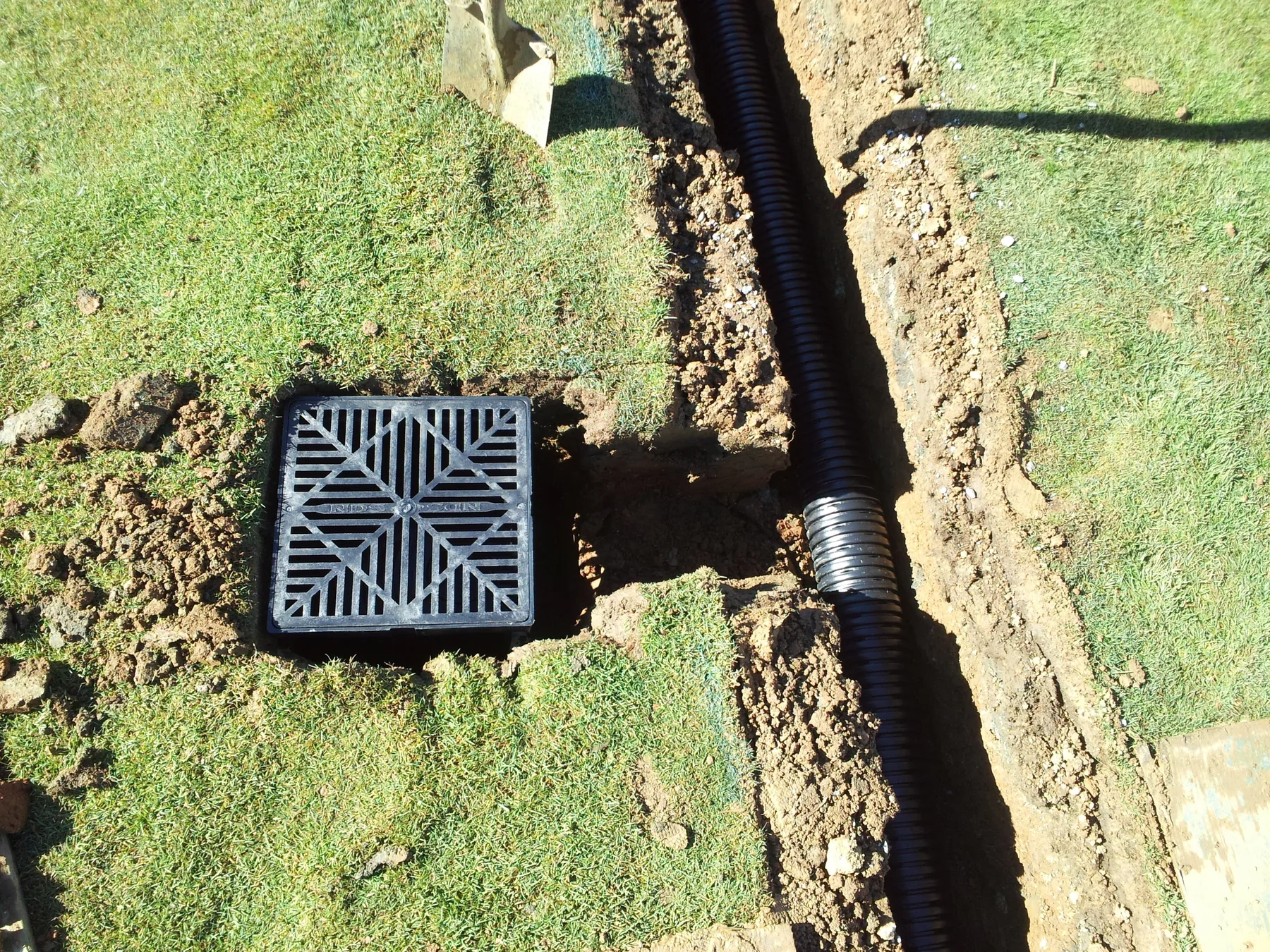
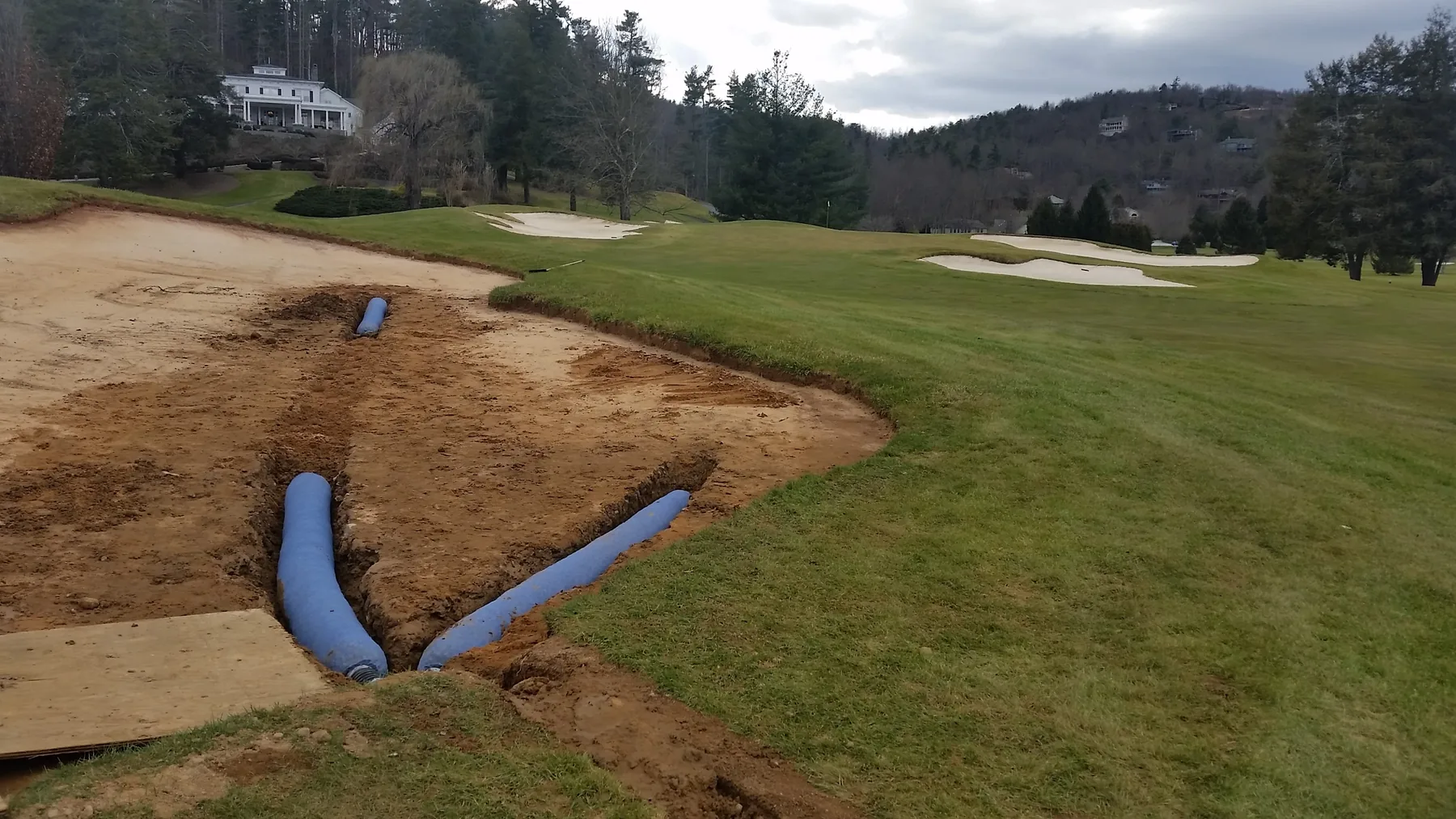
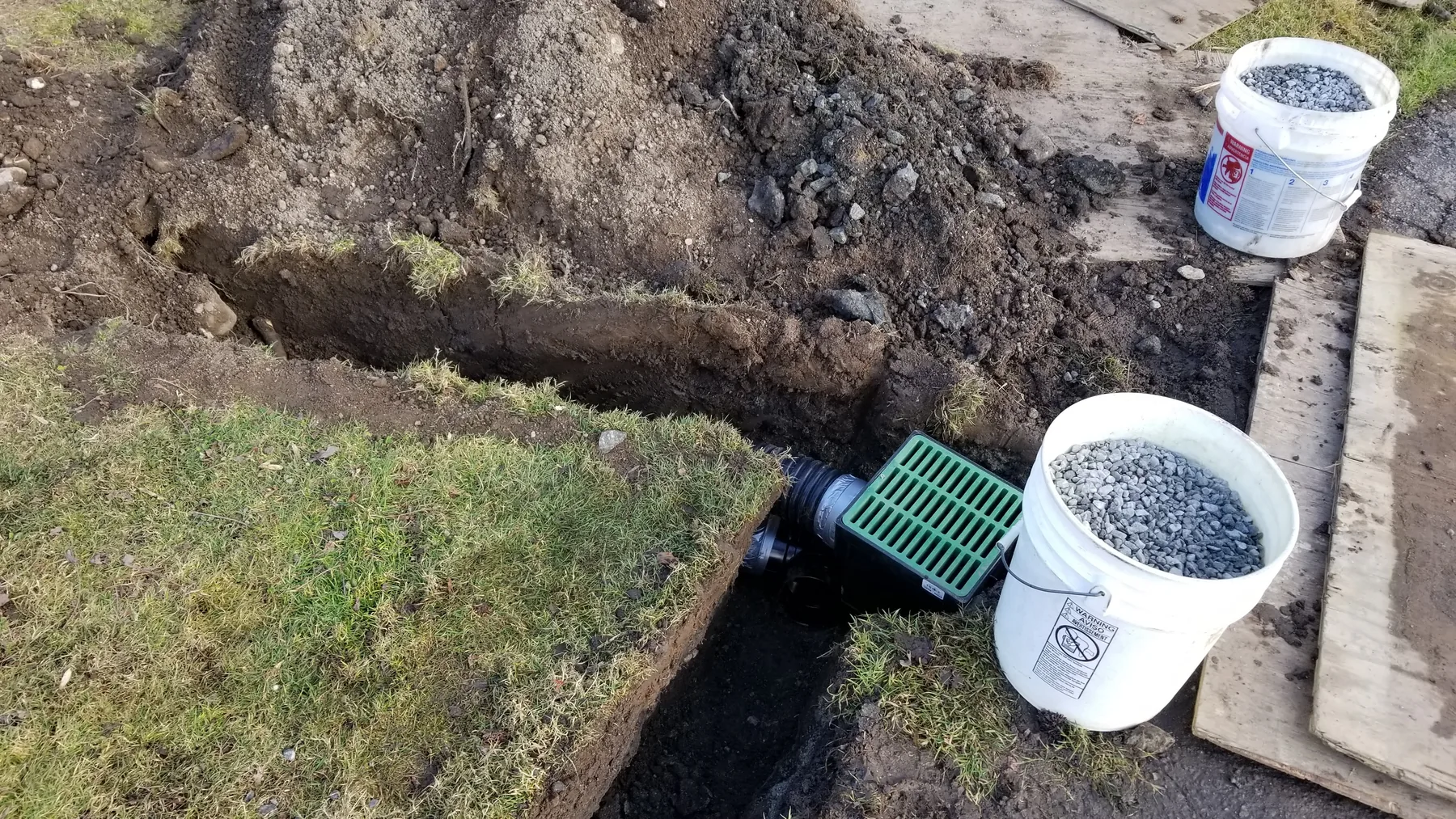
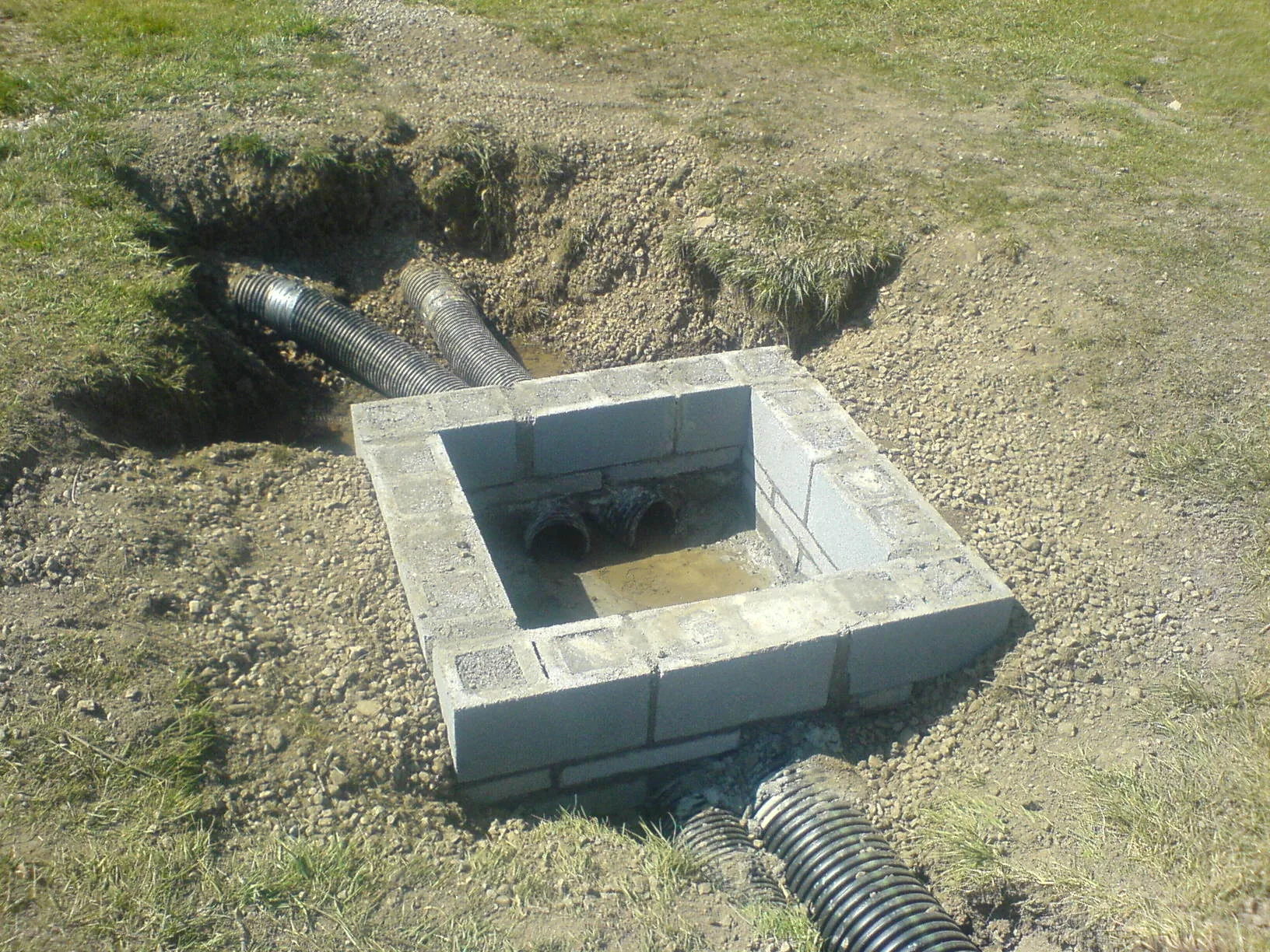
Place pipe, stone, fabric, catch basins, and laterals as connected parts of the drainage plan.
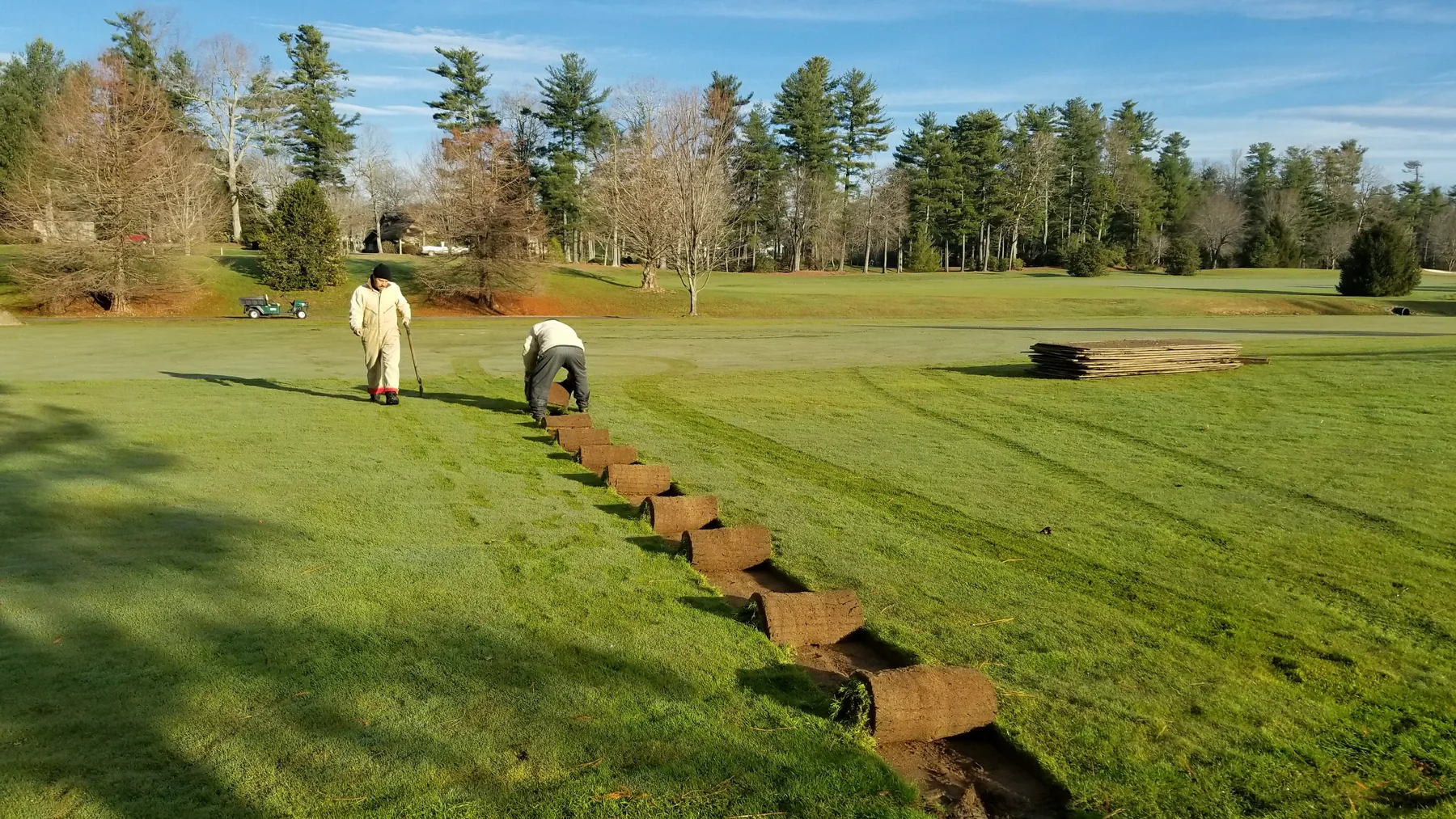
Manage sod, materials, crossings, and final cleanup so recovery can begin right away.
We understand that the environment around the work is part of the job. The crew's conduct, travel paths, cleanup, and awareness of nearby turf and water all matter.
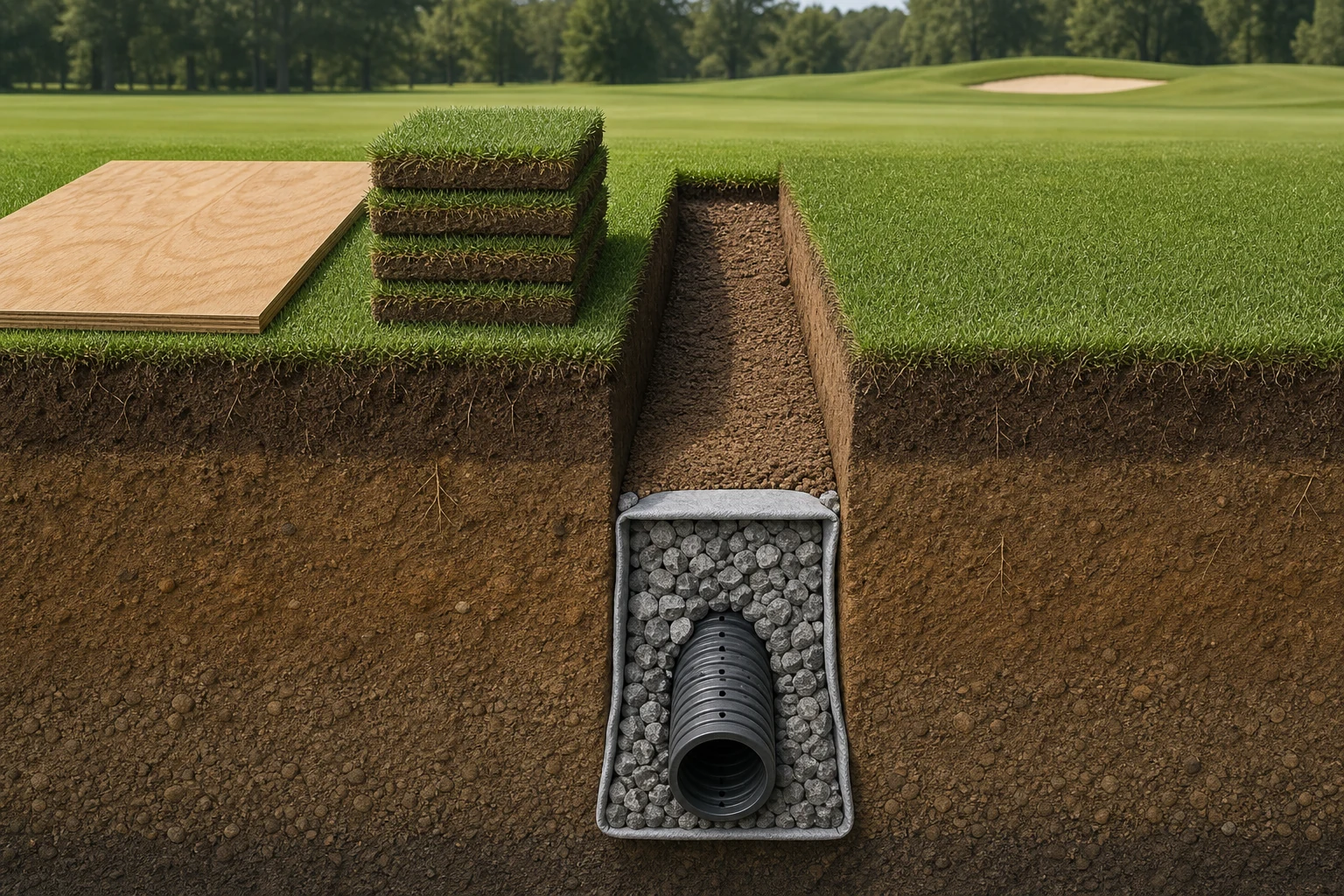
From outlet planning to plywood protection, installation, and cleanup, this is what careful drainage work looks like on turf.
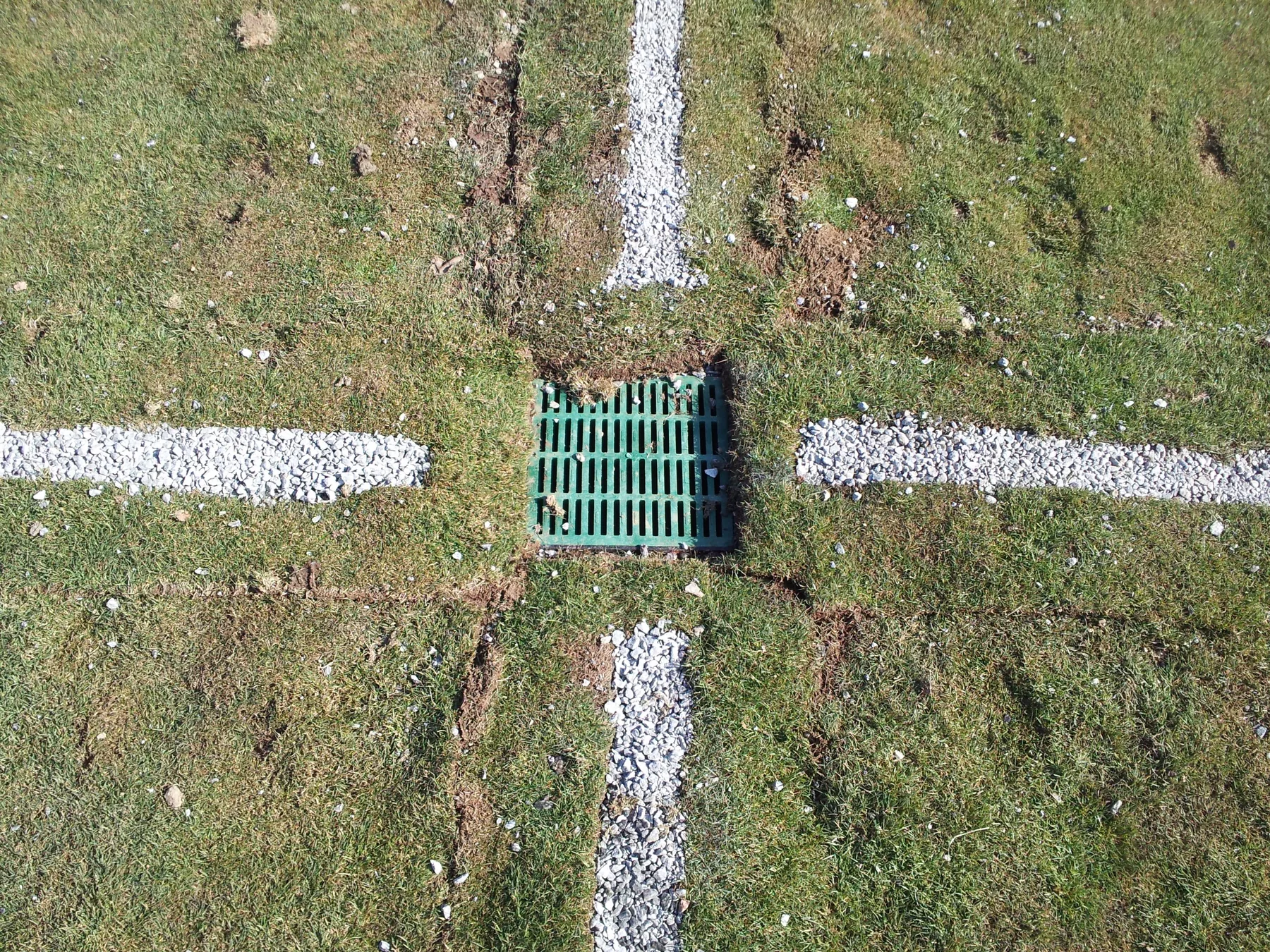
Tell us where water is affecting turf quality, playability, or recovery. We will look at the conditions and recommend a practical path forward.
Email josh@wncturf.com